Customer Login

Getting rid of confidential documents isn’t just about throwing them in the rubbish. If you’re having a clean out and find old company records or personal papers, taking the right steps beforehand is essential for making the shredding process easier and safer for everyone. Here’s a simple guide to help you get your documents ready for shredding.
Identify What Needs Shredded
Before using our Edinburgh-based document shredding services and across Scotland, it is very important to go through your documents to figure out what needs destroyed for certain and what needs to be recycled. Always shred financial records like bank statements, tax returns, investment papers and loan applications. Hospital records including insurance info as well as prescriptions and notes from your doctor also have personal information that need to be securely disposed of.
Legal documents such as contracts, leases and court papers should be shredded too, to keep people that are not permitted access from looking at them. Don’t forget about business files, employee records, payroll info and invoices, these records under any circumstance should not be tossed away recklessly. Even junk mail that has personal info, like pre-approved credit card offers and account statements, can be a threat to security and should be shredded immediately. If a document has personal details, account numbers or confidential business information, it definitely shouldn’t end up in the bin.
Sort and Categorise
To make shredding easier, it’s a good idea to sort personal and business documents so you can figure out what needs to be shredded first. Don’t forget to look over your document retention policies, since some papers like tax records have to be kept for a certain amount of time before you’re able to rid of these documents. For any non-sensitive records like magazines and newspapers, put those straight into the recycling waste instead of shredding them.
Remove Certain Materials
Most document shredding services can handle staples and small paper clips, but some materials should be taken away to prevent damage to shredding machinery. Items such as plastic folders, binders, laminated sheets and rubber bands should be discarded and separated. Staples and small paper clips can typically remain where they are, as shredders are designed to process them without any issues. Taking these extra steps prevents delays and ensures smoother shredding.
Get the Right Option
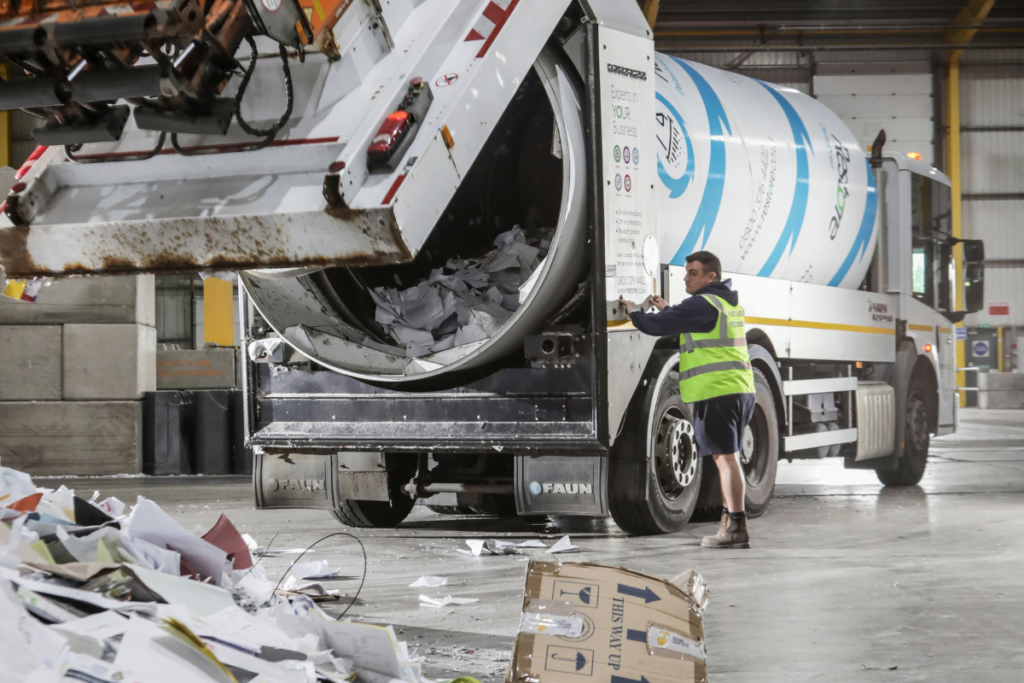
If your company is in need of our Edinburgh-based document shredding services then we have a good few options for you to choose from to suit your business needs. We can offer on-site shredding, we’ll deliver one of our reliable, mobile shredding trucks right to your place of work, to take care of your confidential info as soon as possible. If you have really sensitive documents, we provide a high-security shredding option that turns everything into little bits. Plus, we can handle media shredding right there too. We can also provide off- site shredding, where one of our modern collection vehicles will be sent to pick up your documents and take it back to our depot for shredding. Our business can also collect media for secure destruction at our facility as well.
Why Organising for Shredding Matters
Properly sorting and preparing documents before shredding your company records improves efficiency, security and compliance. Whether a company is protecting customer data or an individual is keeping sensitive information safe, this guide ensures that all confidential files are disposed of competently. While carrying out our services, we’ll always provide you with a certificate of destruction so people know you’re GDPR compliant. Following these best practices makes the shredding process seamless and stress-free while ensuring data remains protected.
Reach Out Today
We provide our services all over Scotland, if you’re interested in getting a free quote for a shredding service, then reach out to us today or phone us on 0800 376 4422 and we’ll get back to you shortly.
Recent news